

Quick answer:
Can a suede jacket get wet? Unlike smooth full-grain leather, suede is highly porous and lacks a protective top layer. When suede gets wet, water binds to the natural oils within the animal hide. As the water evaporates during drying, it pulls those essential oils out with it. This process leaves the suede stiff, brittle, prone to cracking, and permanently stained if not treated immediately.
Meta Description: Caught in the rain? Find out exactly what happens when a suede jacket gets wet and follow our step-by-step emergency damage control guide to save your leather.
The Emergency 4-Step Suede Rescue Sequence
If you get caught in a sudden downpour, do not panic. Follow these precise, time-sensitive steps to minimize damage.
1. Blot, Do Not Rub: Immediate Action.
Take a dry, clean microfiber cloth or paper towel and gently press it against the wet areas to absorb excess moisture. Never rub or scrub, as this pushes water deeper into the nap (the raised fibers) and ruins the velvety texture.
2
Stuff the Sleeves and Body
Shape Retention
2. Stuff the Sleeves and Body: Shape Retention.
Suede structurally stretches and warps when wet, then shrinks as it dries. Stuff the interior of the jacket with plain white packing paper or towels. Avoid newspaper, as the ink can bleed into the damp leather lining.
3. Air Dry Naturally: Takes 12-24 Hours.
Hang the jacket on a wide, padded wooden coat hanger in a well-ventilated room. Keep it completely away from direct heat sources like radiators, fireplaces, or hair dryers. Forcing heat onto wet leather causes severe shrinkage and cracking.
4. Restore the Nap: Post-Drying Care.
Once the jacket is 100% dry, the fibers will likely feel stiff. Use a specialized suede brush to gently brush the surface in small, circular motions. This lifts the fibers back up, restoring its signature soft texture.
Why Smooth Leather and Suede React Differently to Rain:
The fundamental reason smooth leather and suede react differently to rain lies entirely in their grain structure and surface finish.
Smooth leather (like full-grain cowhide or lambskin) uses the tough, outer layer of the animal hide. This surface is dense, tightly packed, and naturally retains the animal’s protective grain, which acts as a built-in shield that shrugs off water droplets.
Suede, on the other hand, is made by splitting the hide and exposing the soft, fibrous inner layer, which is mechanically buffed to create a velvety, raised texture called the “nap.” Because it lacks that protective outer skin, suede is completely open-pored and porous. It acts exactly like a structural sponge—instead of letting rainwater bead up on the surface, it instantly absorbs moisture directly into its core fibers, stripping away the natural oils that keep the leather soft and flexible.
Conclusion:
A suede jacket getting wet is not necessarily a disaster, but it does require immediate attention. Because suede lacks the protective outer grain found in smooth leather, it absorbs water quickly and can lose the natural oils that keep it soft, flexible, and durable. Without proper care, moisture can lead to stiffness, water stains, shrinkage, mold growth, and even permanent damage.
The good news is that most rain-related issues can be prevented by following the emergency rescue sequence: blot excess moisture, maintain the jacket’s shape while drying, allow it to air dry naturally, and restore the nap with a suede brush once completely dry. Acting quickly is the difference between a fully recoverable jacket and a costly restoration project.
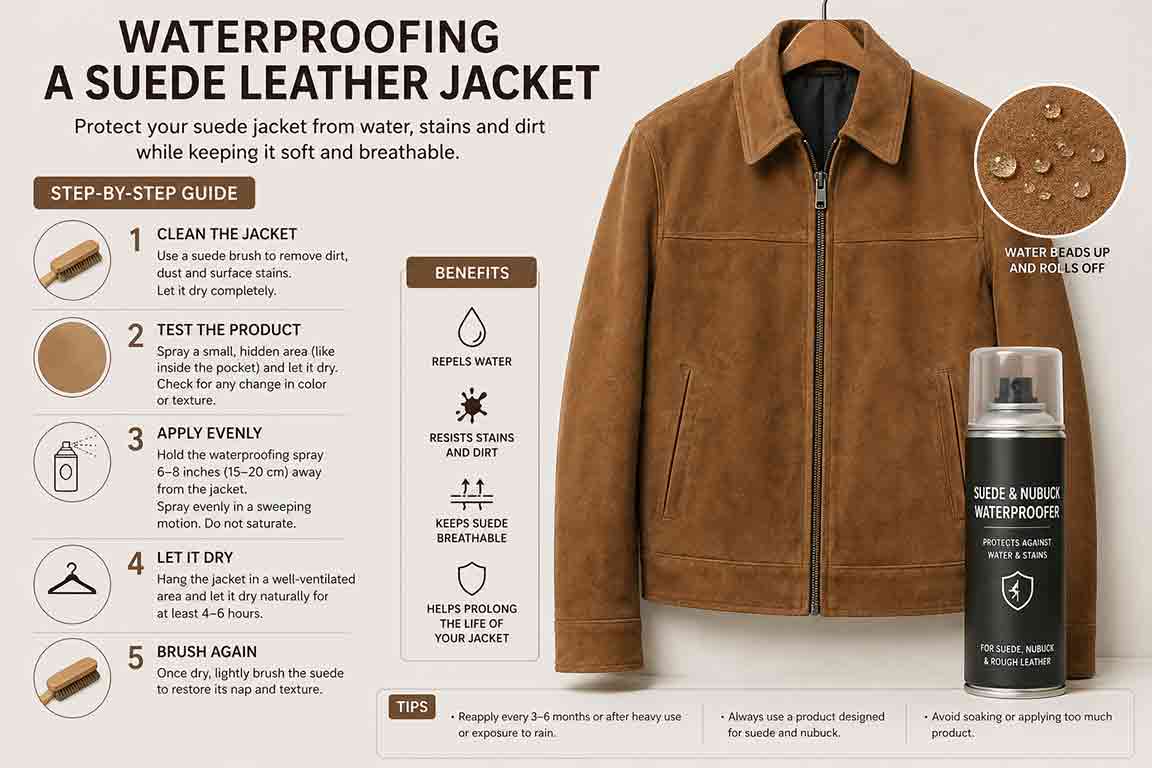
To minimize future risks, apply a high-quality suede protector regularly and avoid wearing suede apparel in heavy rain whenever possible. With proper maintenance and prompt damage control, a premium suede jacket can maintain its luxurious appearance and last for many years.
Remember: when suede gets wet, patience is your greatest tool. Never rush the drying process, and your jacket will have the best chance of returning to its original condition.
Frequently asked questions:
Q1: Will a Suede Jacket Be Ruined If It Gets Wet?
No, a suede jacket is not automatically ruined if it gets wet. Light rain usually causes only minor damage when handled correctly. Allow the jacket to air dry naturally at room temperature, away from direct heat sources such as hair dryers, radiators, or sunlight. Once dry, gently brush the suede with a suede brush to restore its soft texture. However, prolonged soaking or improper drying can lead to stiffness, shrinkage, water stains, mold growth, and permanent damage.
Q2: How Do You Remove Water Stains From Suede?
To remove water stains from suede, lightly dampen the entire affected area with a suede brush or lint-free cloth. This helps distribute moisture evenly and prevents noticeable water marks. Let the jacket air dry naturally, then brush the suede gently to restore the nap. For stubborn stains, a suede eraser or professional suede cleaner may provide better results.
Q3: Can You Spray a Suede Jacket With Water Repellent?
Yes, applying a water-repellent spray is one of the best ways to protect a suede jacket from moisture damage. Choose a silicone-free suede protector specifically designed for suede and nubuck leather. The spray creates an invisible protective barrier that helps water bead up and roll off the surface instead of soaking into the material. Reapply the protector regularly for continued protection.